
2026 COST ANSWER
Current national data puts professional AC compressor replacement around $800–$2,800 for many residential systems, with warranty, system size and compressor type creating much of the spread.
Angi's July 2026 dataset places professional compressor installation at approximately $800–$2,300, with about $1,200 as its reported average.
HomeGuide uses a higher installed average: $1,800–$2,800 for parts and labor when the compressor is not covered by warranty, with costs above $3,000 possible on larger systems. Its current repair data places compressor replacement under warranty around $600–$1,200.
The difference between datasets is useful rather than something to hide. Compressor quotes depend heavily on equipment size, brand, compressor design, warranty status, refrigerant handling and local labor. A homeowner should therefore compare the actual scope behind the number, not one national average.
DO NOT PRICE A COMPRESSOR UNTIL THE COMPRESSOR IS THE DIAGNOSIS
“Outdoor unit is not running” and “compressor has failed” are not interchangeable conclusions
Compressor replacement is one of the more expensive component repairs in a central air-conditioning system. That makes the diagnostic boundary unusually important.
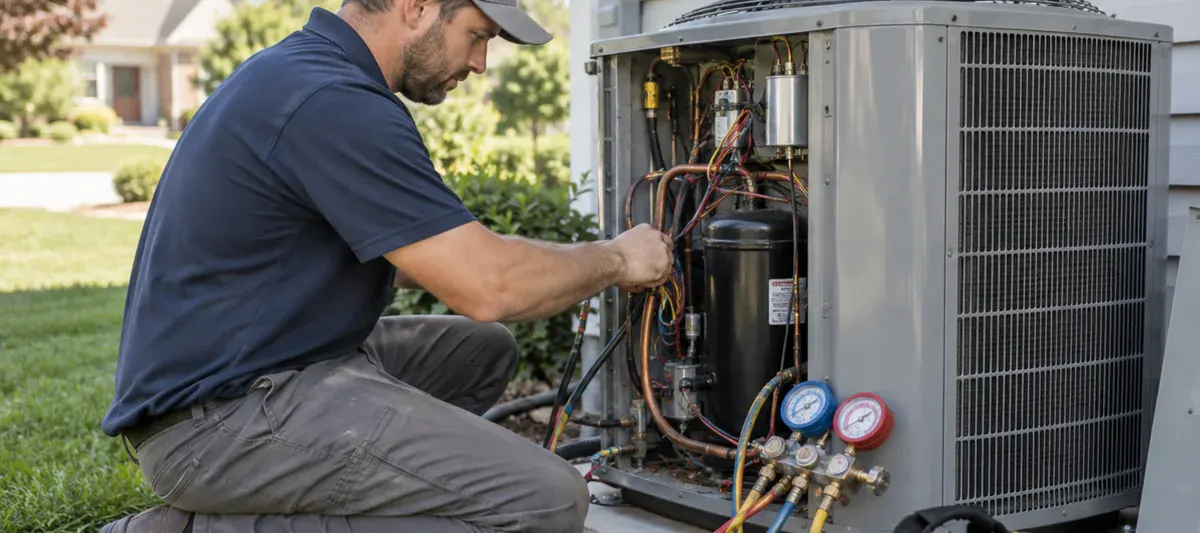
An HVAC technician may need to distinguish compressor failure from electrical-control problems, starting components, refrigerant conditions, wiring faults or another defect that prevents normal operation.
The quote should state why the compressor—not simply the outdoor unit—has been condemned.
A replacement compressor installed into an unresolved system problem can become an expensive repeat failure.
Recovery, evacuation, leak-related work and final charge should be explicit rather than hidden behind “compressor replacement.”
Once the component quote is known, compare it with replacement of the appropriate larger equipment scope.
The first financial question is not “How much is a compressor?” It is “What evidence makes the compressor the failed component?”
WARRANTY STATUS CAN CHANGE THE DECISION BY FOUR FIGURES
Separate the compressor part from the labor required to install it
HomeGuide's current data illustrates the size of this distinction: compressor replacement can fall around $600–$1,200 when the compressor itself is covered, versus roughly $1,800–$2,800 without warranty coverage.
A parts warranty does not automatically make the repair free. Diagnostic labor, removal, installation, refrigerant work, shipping, administrative charges or other materials may remain outside the manufacturer's part coverage.
Confirm whether the replacement component is covered and whether registration or other warranty conditions apply.
Manufacturer parts coverage and contractor labor coverage are different contract layers.
Ask whether refrigerant-related labor and material are included.
Contactors, capacitors, dryers or other required items should be visible in the proposal.
TONNAGE CHANGES THE COMPONENT BUDGET
HomeGuide's current installed-cost data rises as residential cooling capacity increases
Smaller residential capacity.
Common mid-size residential range.
Higher component and installation cost.
Larger-capacity equipment.
HomeGuide's published upper residential band.
These are HomeGuide national planning figures, not a substitute for identifying the exact OEM compressor required for the existing unit. Brand, compressor design and warranty can move the quote outside the tonnage band.
2026 REFRIGERANT RULES DO NOT AUTOMATICALLY CONDEMN AN EXISTING AC
EPA explicitly allows major-component repairs—including compressor replacement—on existing legacy systems
This matters in 2026 because homeowners may hear that an existing R-410A system is now “illegal to repair.” EPA says otherwise.
Under the Technology Transitions Program, existing residential air-conditioning and heat-pump systems using higher-GWP refrigerants can continue to be used and repaired throughout their useful life. EPA specifically identifies replacement of a compressor or condensing unit as permitted service work.
Components for servicing legacy R-410A systems can also continue to be sold. The regulatory boundary is different when a new complete system is installed; beginning in 2026, new systems are subject to the lower-GWP transition rules.
THE REAL DECISION IS COMPONENT LIFE VERSUS SYSTEM LIFE
A $2,000 compressor can be a sensible repair on one system and poor capital allocation on another
The system is relatively young The rest of the equipment still has substantial expected service life.
The part is under warranty The homeowner is primarily paying labor and related service costs rather than the full component price.
The failure is isolated The diagnosis does not reveal a deteriorating coil, repeated refrigerant leaks or multiple major defects.
System performance was otherwise good Comfort, energy use and reliability were acceptable before the compressor failure.
The equipment is older The compressor investment buys access to a system already near a broader replacement decision.
Repair history is accumulating One expensive repair sits beside other recent or anticipated component costs.
The quote approaches replacement economics A major component repair should be compared with the net cost of the next larger replacement option.
Efficiency / comfort problems already exist Replacing the compressor does not correct poor sizing, deteriorated efficiency or broader system mismatch.
For the complete cooling-equipment alternative, compare Central AC Replacement Cost. If both heating and cooling equipment are part of the decision, use HVAC Replacement Cost.
AGE IS A DECISION INPUT, NOT AN AUTOMATIC REPLACEMENT RULE
ENERGY STAR says an air conditioner over 10 years old is a reason to consider replacement—not proof that every repair is irrational
ENERGY STAR recommends considering replacement when an air conditioner or heat pump is more than 10 years old, and also flags equipment needing frequent repairs while energy bills rise.
That provides a useful decision checkpoint for an expensive compressor failure. It does not mean an eleven-year-old system must automatically be discarded. Warranty status, equipment condition, replacement quotes, comfort and expected future repairs still belong in the analysis.
Especially compelling when the compressor part is covered and the rest of the system is in good condition.
ENERGY STAR's replacement checkpoint makes a full-system quote useful even if compressor replacement remains technically viable.
A successful compressor replacement does not reset the age of coils, motors, electronics or the remainder of the equipment.
A heat pump can also become the replacement alternative in some homes. Repair Cost Ledger tracks that separately in Heat Pump Replacement Cost.
FOUR COMPRESSOR DECISION FILES
The same $2,000 repair produces different answers depending on what surrounds it
A warranty-supported compressor repair may remain economically attractive if the rest of the system is sound. The homeowner should compare labor, refrigerant and associated materials with the cost of premature complete replacement.
This is a genuine comparison case. Obtain the full-system replacement number before authorizing the component because the repair is large enough to affect near-term capital planning.
The compressor is no longer an isolated expense. Add the repair history and likely remaining-system risk before treating the compressor quote as the least-cost option.
Do not reject compressor replacement merely because the system uses R-410A. EPA permits servicing existing systems. Compare the actual repair economics and component availability instead.
These are decision examples, not recommendations for a particular system. Equipment condition and contractor diagnosis control the property-specific choice.
NORMALIZE THE COMPRESSOR QUOTE BEFORE COMPARING CONTRACTORS
Ten lines should match before the cheapest compressor proposal is actually the cheapest scope
DIAGNOSIS How was compressor failure confirmed? Require a component-level explanation rather than “AC not cooling.”
PART NUMBER Which compressor is being installed? OEM specification, capacity and compatibility should be clear.
WARRANTY What part coverage remains? Separate manufacturer part warranty from contractor labor coverage.
LABOR Removal and installation included? Clarify standard labor plus any difficult-access charges.
REFRIGERANT Recovery, evacuation and final charge? The quote should state what refrigerant work is included.
LEAK WORK Is another system defect being corrected? Compressor replacement alone does not repair an unrelated leak.
ANCILLARY PARTS What else changes with the compressor? Identify dryers, electrical components and other required items.
STARTUP What commissioning / operating checks are performed? The installed compressor should be evaluated as part of the operating refrigerant system.
REPLACEMENT ALTERNATIVE What does the next-larger equipment option cost? A major repair deserves a comparable capital alternative.
LABOR WARRANTY Who owns a post-repair problem? Record the contractor's workmanship coverage separately from the manufacturer's compressor warranty.
USE A DECISION WORKSHEET, NOT A FAKE “50% RULE”
Compare money already committed to the old system with the useful life the repair is expected to buy
Parts + labor + refrigerant + associated work.
Remove covered component cost from the real owner expense.
Add costs that reveal broader system deterioration.
Use an actual comparable contractor scope, not an internet average.
Age, condition, comfort and reliability determine the runway.
A percentage rule cannot know whether the compressor is under warranty, whether the rest of the system is healthy or whether the homeowner already expects to replace the equipment next year.
HIGH-INTENT PRICE ANSWERS
AC compressor replacement cost in plain terms
How much does an AC compressor cost to replace in 2026? Angi currently publishes about $800–$2,300 for professional installation. HomeGuide places typical out-of-warranty replacement around $1,800–$2,800.
How much is compressor replacement under warranty? HomeGuide currently uses approximately $600–$1,200 when the compressor part remains under warranty, because labor and related service costs can still fall to the homeowner.
How much does a 3-ton AC compressor cost? HomeGuide's current installed table puts 3–3.5 ton systems around $2,000–$2,600 on average.
Should I replace the compressor or the whole AC? Compare warranty status, system age, repair history, condition, efficiency and the actual complete-system quote. Older equipment with repeated repairs makes the full-system alternative more important.
Is an R-410A air conditioner still repairable in 2026? Yes. EPA explicitly allows existing legacy residential AC and heat pump systems to continue being repaired, including compressor and condensing-unit replacement.
Does the 2026 refrigerant transition require a new AC? No. EPA's Technology Transitions rules distinguish service of existing equipment from installation of a new complete system.
At what age should I consider replacing the AC? ENERGY STAR identifies equipment over 10 years old as a point to consider replacement, particularly when repairs are frequent or energy bills are rising.
Why can two compressor quotes differ so much? Tonnage, compressor design, brand, warranty, refrigerant work, associated parts and labor rates can all change the installed scope.
METHODOLOGY & SOURCES
2026 cost data is separated from federal refrigerant rules and equipment-replacement guidance
Pricing was reviewed September 6, 2026. Angi and HomeGuide provide independent national consumer cost benchmarks. EPA is used for the 2026 refrigerant-transition and legacy-system service rules. ENERGY STAR is used for its equipment-age and frequent-repair replacement guidance.
Current $800–$2,300 professional installation range, reported average and size / type / refrigerant cost factors.
02 · HOMEGUIDE · CURRENT DATA AC Compressor CostCurrent $1,800–$2,800 typical installed range plus compressor replacement figures by system tonnage.
03 · HOMEGUIDE · AC REPAIR DATA Air Conditioner Repair CostCurrent warranty / out-of-warranty compressor repair context and related residential AC component costs.
04 · U.S. EPA · HFC TECHNOLOGY TRANSITIONS Frequently Asked Questions on the HFC PhasedownFederal guidance confirming that existing systems can continue to be serviced, including compressor replacement, while new system installations follow the lower-GWP transition.
05 · ENERGY STAR · REPLACEMENT GUIDANCE When Is It Time to Replace?Consumer guidance identifying 10+ year-old AC equipment, frequent repairs and rising energy bills as reasons to consider replacement.
This report provides U.S. property cost-planning information, not HVAC diagnosis, refrigerant-handling or code advice. Compressor failure, replacement compatibility, refrigerant recovery and charge, electrical work, warranty eligibility and the condition of the remaining system must be established for the actual equipment by appropriately qualified HVAC professionals and applicable authorities.