
FIRST, THE NUMBER YOU CAME FOR
How much does it cost to replace an air handler?
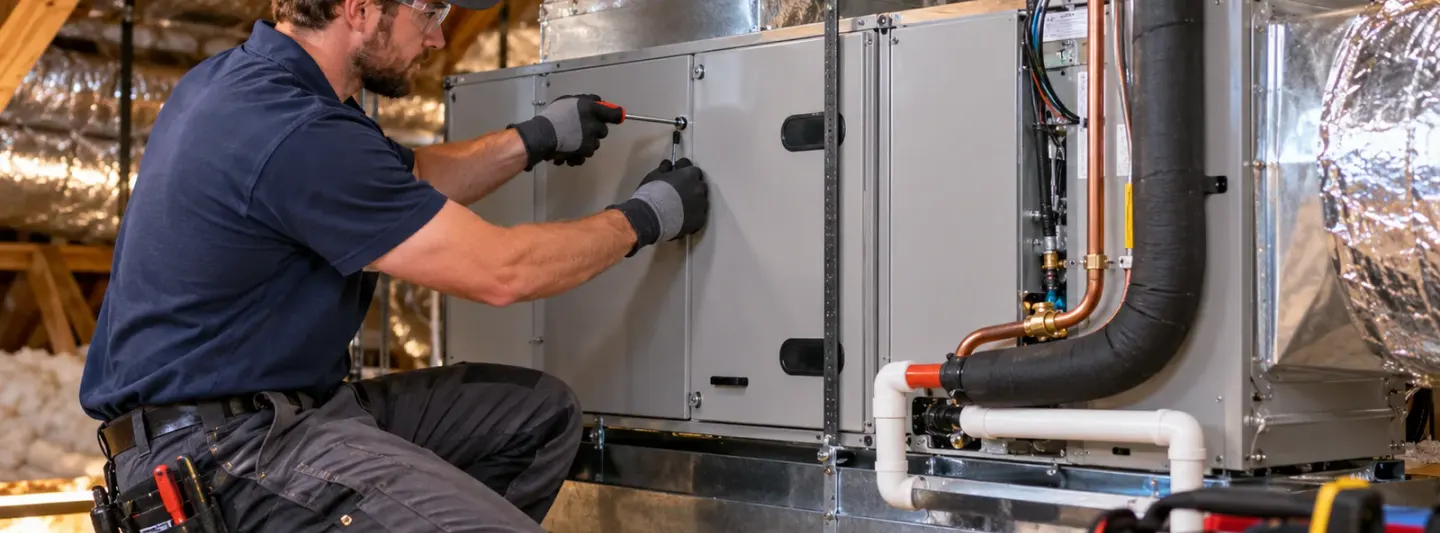
Imagine the upstairs bedrooms are getting warm even though the outdoor AC unit is running. A technician points to the indoor equipment and says you need a new air handler. You look up a replacement price, see several different numbers, and wonder what you're actually being charged for.
For a standard residential air handler replacement in the United States, two large consumer cost guides put many installed jobs in roughly the $1,500–$3,500 range. That means a replacement indoor unit and the labor to install it—not necessarily a new outdoor condenser, major ductwork, or changes to the home's electrical system.
Replacement of an indoor air handler, with installation
Residential air handler replacement, equipment and labor
Sources: HomeGuide (October 2025 guide, available in 2026) and Angi (updated September 18, 2026). These use different data, so don't average them into one supposedly exact national price.
If your bid is $2,600, that doesn't automatically mean it's fair. If it's $4,800, that doesn't automatically mean you're being overcharged. The real test is what's in the box, what must be changed around it, and whether the new indoor unit matches the rest of your system.
When contractors say “air handler,” they usually mean the indoor cabinet that moves air through the home's ducts. The full HVAC system replacement guide covers a much bigger project. This page stays focused on the indoor component.
KNOW WHAT YOU'RE BUYING
The air handler is the indoor half—not the entire AC system.
Think of your cooling system as a team. Outside, the condenser or heat pump helps move heat. Inside, the air handler contains a fan that pushes conditioned air into your rooms. Many setups also have a cooling coil inside or beside the cabinet. A filter and a drain system help the equipment work cleanly and deal with moisture.
Moves air through ducts. May include the cooling coil and electric heat components.
This articleWorks with the indoor coil to heat or cool the home, depending on the system.
A separate costConceptual illustration, not a wiring or refrigerant diagram. Exact equipment varies; some homes have a furnace or a different indoor arrangement.
A company might quote a bare cabinet, a cabinet with a matching coil, or an indoor package with additional electric heat. These aren't interchangeable offers. Ask for the complete model number and a written list of included components. The cheapest-looking air handler might not include everything your current system needs.
If the outdoor unit also needs replacement, that becomes a different decision. See our central AC replacement cost guide or heat pump replacement cost guide for full-system scenarios.
UNDERSTAND THE ESTIMATE
A $2,800 estimate can make sense—or hide missing work.
HomeGuide lists $700–$1,600 for the unit and $800–$1,800 for replacement labor as general price components. Those ranges explain why the installed total can differ from a price you find for the equipment online. They don't tell you exactly how a particular contractor divides a specific invoice.
Made-up example to show how to read a quote, not a real customer invoice or national average. Actual providers may group or bill these items differently. Ask about tax and permit fees.
Now imagine another installer offers $2,550 but says “refrigerant work, drain modifications, and disposal are extra.” You can't fairly compare those two offers until you know what the second job would really cost. Request a scope that names what is included, excluded, and priced only if needed.
Also ask for a start-up check. A new unit isn't truly ready just because its fan turns on. The contractor should confirm proper airflow, drainage and system operation after the swap.
THE QUESTION THAT MATTERS MOST
Can you replace just the air handler and keep the outdoor unit?
Sometimes, yes. If the outdoor equipment is in good shape and there's a suitable indoor replacement that works with it, changing only the air handler can avoid paying for a full system. But it isn't enough for two units to have the same brand name or a similar size on the label.
The inside and outside parts must be compatible as a system. Otherwise you could pay for equipment that doesn't deliver its expected performance, doesn't qualify for a stated efficiency rating, or creates future service problems. This is especially important when the equipment uses different refrigerants, controls or airflow requirements.
Ask for the exact matching information.
“What indoor model are you installing, what outdoor model will it connect to, and can you show me the manufacturer-approved or AHRI-certified combination if one applies?”
The Air-Conditioning, Heating, and Refrigeration Institute (AHRI) certifies many split-system indoor/outdoor combinations together. A matching reference number or certificate can help you compare the proposed equipment with the existing outdoor unit.
See AHRI's homeowner explanation ↗Not every possible replacement has a published AHRI-certified pairing, and certification alone doesn't replace the installer's job of checking manufacturer instructions. If no listed match exists, ask the contractor to explain the equipment compatibility in writing rather than assuming it will work.
For a house with an older heat pump, the cost of keeping the outdoor equipment may need to be weighed against the longer-term cost of updating both halves. That's a reason to request two separate quotes, not a reason to automatically replace everything.
WHY YOUR HOME MAY COST MORE
The biggest price surprises are often around the air handler.
In a simple replacement, the installer can remove the old cabinet and connect a new one in the same accessible spot. But older homes don't always make that easy. These are the items that deserve a separate line on the quote:
Connections to existing ducts
If the new cabinet has a different shape, the sheet-metal connections may need to change. That is different from replacing all the ducts in your home. Ask what portion will be modified.
Condensate drain and safety pan
Cooling makes water, and that water has to go somewhere. An attic installation may need drainage and overflow protection reviewed carefully. Find out who repairs any ceiling damage if a leak develops during installation.
Electrical supply and optional heat strips
Some air handlers include electric backup heat. That can change electrical needs, but it doesn't mean every swap needs a new panel. Ask what wiring changes are actually required.
Refrigerant and coil connections
Changing indoor coils or refrigerant lines may add work beyond mounting a cabinet. A qualified HVAC professional should explain what refrigerant-side work is required and whether it is included.
Permits, disposal and access
Permit rules differ by location. Removing an old unit from a tight attic can take more time than working in an open garage. Ask which fees are already accounted for.
These aren't automatic add-ons. A contractor should be able to point to the actual condition that makes each one necessary. If someone is also recommending entirely new ductwork, our ductwork replacement cost guide explains that separate job.
REPLACEMENT ISN'T THE ONLY ANSWER
When should you repair the indoor unit instead?
A loud indoor fan or weak airflow doesn't automatically mean the entire air handler is beyond saving. A dirty filter, a failing blower motor, a blocked drain or an electrical part could be involved. Some of those problems are much smaller than a whole-cabinet replacement.
A single faulty part
The cabinet and coil are otherwise sound, the equipment is reasonably serviceable, and a technician can identify a specific repair with a clear price.
Multiple major problems
The unit is aging, badly corroded, repeatedly failing, or its components are difficult to source. Compare the complete installed replacement cost, not just an equipment sticker price.
For context, HomeGuide publishes several different air-handler component costs, including $200–$900 for a blower fan/motor in one parts table and $400–$2,400 for an evaporator coil. Its page also gives wider figures elsewhere for particular motor and coil projects. Those aren't universal repair quotes; ask for the exact part, labor and warranty for your system.
Don't open electrical panels or refrigerant lines yourself. If the blower stops, water is leaking near wiring, or breakers keep tripping, switch off the system when safe and call a qualified technician. A repair diagnosis is often worth paying for before making a several-thousand-dollar decision.
SAME EQUIPMENT, DIFFERENT JOB
An attic replacement is not the same as a garage replacement.
Where the old unit sits can change how many people are needed, how long removal takes and what must be protected. That is a real cost factor, even when two homes use the same model.
Access and water protection
A narrow hatch, low roofline or long carry makes a swap slower. Ask about safe access, the drain pan, an overflow switch and the path the new unit will take into the space.
Fit and service clearance
Measure the opening, not just the old cabinet. Make sure the new unit can be removed and serviced later. Wall or door alterations should be discussed before they start.
Usually easier access
There is often more working room, but drains, electrical connections and return-air pathways still need checking. Easy access does not mean every installation is identical.
Be cautious with estimates that ignore a visible access problem and promise “no extra labor” before a site visit. Equally, don't assume a tight space always requires replacing the entire heating and cooling system. Ask how the contractor plans to complete the work.
TAKE THIS TO YOUR ESTIMATE APPOINTMENT
Seven things to confirm before you approve the work
- What exactly is failing? Ask whether a repairable component is the cause before paying for a full indoor unit.
- Which model are you installing? Get the make, model and whether the quote includes the coil, blower, electric heat and any needed controls.
- Does it match the outdoor equipment? Ask for documented compatibility and an AHRI reference number if applicable.
- What does the installed price include? Removal, labor, refrigerant work, drainage, electrical connections, disposal and tax should be clear.
- What is excluded? Ask which findings could trigger a revised price and require your approval.
- How will you test it? Confirm airflow, cooling or heating operation, drainage and safety controls will be checked at completion.
- What warranty applies? Separate the manufacturer's equipment warranty from the contractor's labor warranty. Get both in writing.
Replacing only an indoor air handler can be much cheaper than buying a complete new HVAC system. But a good quote must describe the right matched equipment and the work needed to install it. Choose based on the total finished job—not the lowest number on the first page.
HOW WE CHECKED THE NUMBERS
Sources and limits of this cost guide
Research reviewed in October 2026. Price references summarize publicly published U.S. consumer cost guides, not individual invoices gathered by RepairCostLedger. They are broad planning figures, not a quote for your house. We have not inspected your equipment. The $2,800 receipt is a fictional, itemized example for explaining a contractor estimate—not a real project or independently observed bill.
- HomeGuide — How Much Does an Air Handler Cost? (October 20, 2025). Installed prices, equipment-only ranges, labor and installation factors.
- Angi — How Much Does Air Handler Replacement Cost? [2026 Data] (updated September 18, 2026). Installed price benchmarks and common project cost factors.
- AHRI — Air Conditioners and Heat Pumps. Explanation of indoor/outdoor system matching and reference numbers.
- ENERGY STAR — Air-Source Heat Pumps. Home equipment sizing considerations, separate from replacement cost estimates.
Editorial information only. Local prices, permits, manufacturer requirements and equipment condition vary. Have a qualified HVAC contractor inspect the actual installation before authorizing work.