
FIRST, THE NUMBER YOU CAME FOR
A straightforward sewer camera inspection often costs $125–$500.
Imagine this: the downstairs toilet has backed up twice in a month. The plumber cleared it last time, but the same problem is back. Someone suggests putting a camera into the sewer pipe to see what's happening. Is that a $200 job, or a $2,000 one?
For a typical home sewer camera inspection, HomeGuide reports $125–$500, with an average around $280. But Angi's September 2026 data gives a much wider $271–$1,725 range and an average around $995. These are different sets of reported projects, not figures to blend into one supposedly precise national price. HomeGuide's pricing details separate basic inspections from difficult access and other plumbing work.
The useful question is not which website has the “correct” average. It's what your plumber is actually offering to inspect. An easy-to-reach sewer line with a clear entry point is a different appointment from a long, blocked line that needs extra work before the camera can get through.
“What's the total price to inspect my main sewer line, and does it include the recording and a clear explanation of anything you find?”
WHY TWO PHONE QUOTES CAN SOUND SO DIFFERENT
Check the entry point, the recording, and where the camera stops.
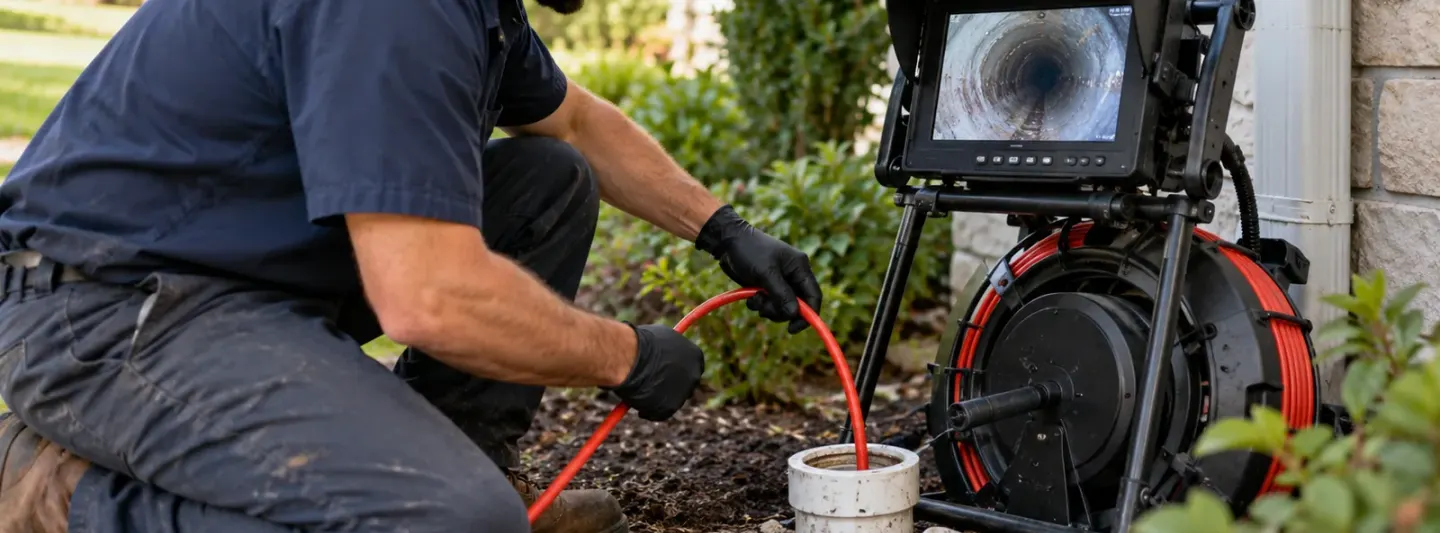
A sewer camera is a small, lighted camera pushed along the drain on a flexible cable. The person operating it watches a screen as the camera moves through the pipe. If you're lucky, the pipe is accessible from a cleanout—a capped opening made for clearing and inspecting the line.
If there isn't a usable cleanout, the plumber may need another way in, sometimes by removing and reinstalling a toilet. That's more work, and it's one reason the fee rises.
| What you're booking | Published range | What to confirm |
|---|---|---|
| Camera inspection with a usable cleanout | $125–$500 | How much of the main line will be viewed? |
| Inspection without a cleanout | $175–$750 | Is toilet removal and reinstallation included? |
| Sewer scope added to a home inspection | $100–$250 extra | Who performs the scope, and will you receive video? |
| Recording or written report, when extra | $50–$150 extra | Is the report already included in the base visit? |
The first three rows are from HomeGuide. The optional recording/report price is from Angi. These are not four charges added together. Your contractor's package may already include several items.
Also ask whether clearing a clog is included. Usually it isn't. If the camera runs into a solid blockage, the plumber may have to remove it before continuing. That could turn an inspection visit into two separate services. A low advertised camera fee is not the final bill if drain cleaning is charged separately.
WHAT THE PICTURES ACTUALLY TELL YOU
You want to see the problem, not just hear a frightening description of it.
The value of a camera isn't the gadget itself. It's being able to see what the plumber is talking about. If you are being told a buried sewer pipe needs a major repair, a clear image and location are a much better starting point than a guess.
Tree roots coming through a joint
Thin roots may mean a joint isn't watertight. Ask whether they are actually blocking the pipe and what the joint looks like after cleaning. Roots alone don't tell you how much pipe needs repair.
A pipe that has shifted or cracked
The camera may show a break or an uneven joint where one pipe section no longer lines up with the next. Ask the operator to show you the exact point and explain whether water and waste can still pass normally.
Grease, debris, or standing water
A blocked view might only show the obstacle. Water collecting in a low section can suggest a sag, sometimes called a belly. But camera footage alone may not establish the full slope of the buried pipe.
The inspection should leave you with something usable: which pipe was viewed, where the camera entered, roughly how far it traveled, what it found and where it stopped. For more formal pipe assessments, NASSCO, a sewer inspection and rehabilitation industry association, describes the importance of consistent condition records. You don't need a certification to understand your own inspection, but you should be able to ask the operator to walk you through the findings.
A CAMERA IS HELPFUL, NOT ALL-SEEING
Three things the camera may not be able to prove
If roots, debris or a collapsed section stop the camera at 28 feet, the remaining pipe is still unknown. Ask for the distance reached, and don't accept “the entire line is ruined” solely on the basis of an obstruction at one point.
A video shows the inside surface. It cannot directly show whether the surrounding soil is washing away, or measure exactly how much water might be leaking out through a joint. Other tests or professional judgment may be needed.
A crack on a screen doesn't establish what permits, excavation or lining a property will need. Before agreeing to a large repair, ask for the location of the defect, the options, and a written estimate with the work spelled out.
The U.S. Environmental Protection Agency's guidance on private sewer laterals lists camera inspection as one way of evaluating underground pipes, alongside other tests that answer different questions. In plain English: a clear video is useful evidence, but it isn't a complete picture of everything underground.
Treat the backup and contamination as the immediate problem. Avoid contact with sewage, keep children and pets away, and call a qualified professional. An inspection can help find the cause, but it does not clean or make a contaminated room safe. Our sewer line repair guide explains the repair side of the job.
BEFORE YOU BUY AN OLDER HOUSE
A sewer scope is a small expense compared with discovering a broken line after closing.
Suppose you're buying a house built many decades ago. The kitchen and bathrooms seem fine during the walkthrough. That doesn't tell you whether the pipe under the yard has roots, a damaged joint or a section that holds standing water.
HomeGuide says a sewer camera scope typically adds $100–$250 to a home inspection when offered as an add-on. Not every general home inspector performs sewer scopes, so find out who will do the job and whether they're equipped to inspect the relevant line. Don't assume a standard home inspection includes it.
Ask what will be inspected
Will they examine the home's main underground sewer line, or only the visible drains inside the house? Are both ends accessible? What happens if the camera can't reach the street connection?
Keep the video and notes
If there's a problem, you want enough information to get a repair opinion inside your inspection or negotiation window. A verbal “looks good” is harder to review later.
You can also ask a plumber to inspect a home you're not buying. A recurring clog, an older clay or cast-iron sewer pipe, or years of tree-root problems may justify checking the condition before deciding whether to keep cleaning the pipe or investigate a repair.
HOW TO AVOID AN EXPENSIVE SURPRISE
Compare what you'll receive—not just the camera fee.
Here's a practical example. Company A offers an inspection for $225 and sends you a video file. Company B advertises $149, but wants another $100 for the recording. The first costs $225; the second costs $249 if you need the footage. Those are hypothetical quotes to show how to compare scope, not real offers from contractors. Neither is necessarily a better deal until you know how much pipe each intends to inspect.
It takes a minute to ask these questions over the phone. That minute is worthwhile when a camera visit could lead to a sewer replacement proposal.
- What's the total price for the visit?Ask about the service call, minimum charge and any after-hours premium.
- Is there an accessible cleanout?If not, ask how the plumber plans to enter the pipe and what that adds.
- Will I get the video and a short explanation?Confirm whether it's included, emailed afterward or billed separately.
- What happens if the camera can't get through?Will the visit stop, will cleaning be suggested, and do you approve that fee first?
- Can you locate and mark a damaged spot?A useful location can keep a later repair focused. Confirm if locating is included.
If the company doing the inspection also wants to sell you a costly repair, ask to see the recorded defect and obtain another qualified opinion where practical. Good inspection footage should make the decision clearer, not create pressure to sign immediately.
AFTER THE CAMERA COMES OUT
What you do next depends on what the video actually shows.
A normal-looking pipe may mean you don't need the dramatic repair you feared. A blocked line may need cleaning before its condition is known. A damaged section may require a targeted repair, while widespread problems can call for a wider plan. The right next step depends on the evidence and the plumber's diagnosis.
Ask whether it can be cleared and inspected again before discussing excavation or a new line.
Our sewer line repair cost guide covers localized fixes and the factors that make them expensive.
Compare replacement costs with repair options. Some damaged lines may be suitable for pipe lining, but not every pipe is.
The bottom line: Pay for an inspection that tells you something useful. A $125–$500 basic camera visit may be enough for an accessible home sewer line, but more involved work can cost considerably more. Ask for the full fee, the inspected distance, the video and a clear explanation before agreeing to additional work.
WHERE THESE NUMBERS AND EXPLANATIONS COME FROM
Sources and price notes
These are published U.S. cost estimates, not estimates collected from local plumbers for this page. The ranges from HomeGuide and Angi differ significantly because they use different reported project data and describe visits with different complexity. The inspection date, property and included services can change your own quote.
- HomeGuide — Sewer Camera Inspection Cost. Basic inspection, difficult access, cleanout and real-estate inspection prices.
- Angi — Sewer Line Camera Inspection Cost (September 2026). Wider range, camera types and optional report costs.
- NASSCO — Assessment. What pipe camera inspections can record and why inspection quality matters.
- U.S. EPA — Private Sewer Laterals. Pipe inspection methods and their different uses.
Editorial research checked October 17, 2026. The publication date on this draft is a proposed slot and must be updated if the release schedule changes. Your local conditions and contractor's written scope govern the price you will actually pay.