
2026 COST ANSWER
A straightforward sump-pump replacement commonly lands around $300–$800, but broader replacement projects can move above $1,000 when the pit, discharge, electrical or backup system changes too.
Angi's August 2026 replacement data places professional sump-pump replacement at $309–$755, with a wider observed range of about $120–$1,350.
HomeGuide publishes approximately $400–$700 for replacing an existing pump when the installer can remove the old unit and connect the new one without excavation or electrical modifications.
HomeAdvisor uses a broader 2026 replacement range of $645–$2,120, averaging about $1,362. That wider figure is useful because many projects sold as “replacement” include more than the pump itself.
FIRST DETERMINE WHETHER THIS IS ACTUALLY A PUMP SWAP
Replacing a pump in a working pit is fundamentally different from creating or rebuilding the sump system
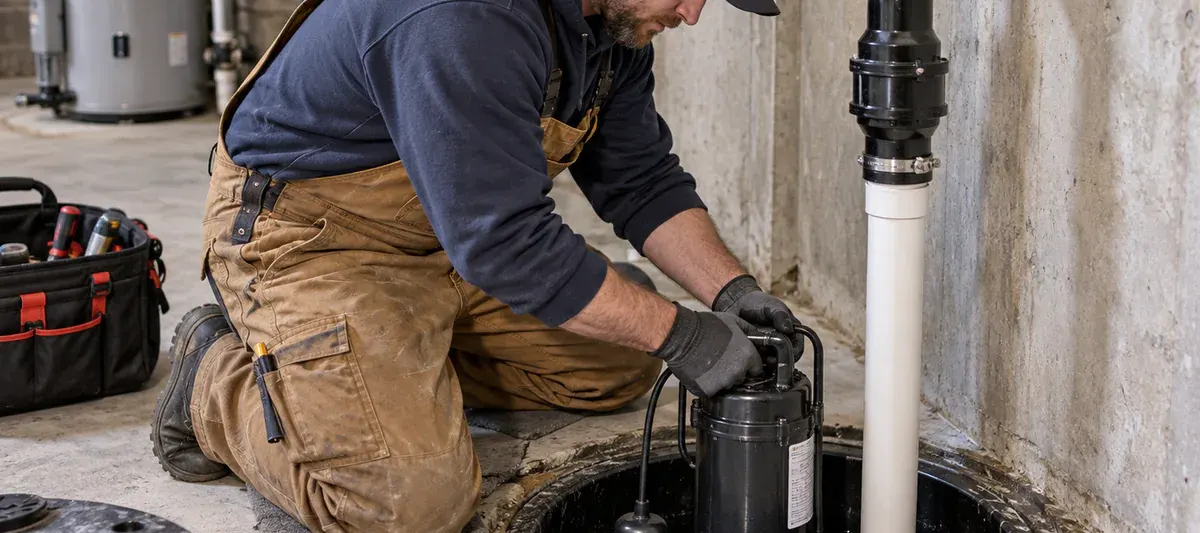
Remove the failed pump, install the replacement, reconnect the discharge, verify the switch and test operation.
Check valve, discharge fittings, electrical connection, alarm, backup pump or other components change with the replacement.
Excavation, basin work or a new discharge path can move the project into the economics of installation rather than a simple replacement.
HomeGuide's current national data illustrates the boundary well: replacement of an existing pump is about $400–$700, while a new sump installation averages roughly $600–$2,500 installed.
If the larger question is how groundwater reaches the pit in the first place, compare Interior French Drain Cost. That drainage system and the sump pump work together but solve different parts of the water problem.
PEDESTAL AND SUBMERSIBLE PUMPS CREATE DIFFERENT COST FILES
Pump type affects equipment price, access and how the unit occupies the sump basin
Angi's current equipment range. The motor remains above the basin while the pumping assembly reaches into the water.
Lower equipment entry cost; installation must still match the existing basin and discharge arrangement.Angi's current equipment range. The unit operates inside the sump basin and is commonly used where greater pumping capability or a contained installation is desired.
Equipment cost is only one input; capacity at the actual discharge head matters more than sticker horsepower alone.A proposal should identify the actual model being installed rather than simply saying “1/3 HP sump pump” or “submersible pump.” Horsepower does not describe the complete operating point.
SIZE THE PUMP TO THE WATER AND THE DISCHARGE PATH
The pump must move enough water at the actual vertical lift and piping resistance of the house
Pump performance changes as the system asks the pump to push water higher or through more restrictive piping. Zoeller's technical guidance describes total dynamic head as the resistance of the piping network against which the pump operates.
That means two nominally similar pumps can deliver different usable flow at the same house. A replacement should be checked against the actual lift, discharge length, fittings and required flow—not selected solely because its horsepower matches the unit being removed.
How quickly can the pit fill during the demanding event?
How high must the pump raise water before discharge?
Length, diameter and fittings affect the operating load.
Confirm useful flow at the system's actual operating point.
Matching horsepower is not the same as matching pumping performance.
REPAIR CAN COST ENOUGH TO MAKE REPLACEMENT THE CLEANER DECISION
Diagnose the switch, check valve and discharge before condemning the pump—but compare the repair total with a complete replacement
HomeGuide currently places sump-pump repair around $200–$870, depending on pump type and failed component. Angi's 2026 replacement article places common repairs around $400–$550.
FLOAT SWITCH Pump does not start or stop correctly A failed control can imitate a dead pump.
CHECK VALVE Water returns to the pit after shutdown Repeated backflow can make the pump cycle more than necessary.
IMPELLER / DEBRIS Motor runs but flow is poor Obstruction or internal wear can reduce pumping performance.
DISCHARGE LINE The pump works against a blocked path Replacing the motor does not solve a restricted or frozen discharge.
MOTOR / INTERNAL FAILURE The pump itself has reached the repair boundary When repair approaches replacement cost, a complete new unit may provide the cleaner economic choice.
THE EVENT THAT FILLS THE SUMP CAN ALSO REMOVE GRID POWER
FEMA recommends battery-operated backup for sump pumps because a primary electric pump cannot protect the basement during an outage
FEMA identifies sump pumps as a defense against basement seepage and flooding and specifically advises choosing a device with battery-operated backup in case electrical power fails.
This is an important replacement-time decision because access to the pit and discharge system is already open. Adding resilience at the same time can be more coherent than waiting for the next pump failure or outage.
THE NEW PUMP IS ONLY AS USEFUL AS THE PATH LEAVING THE PIT
Check valve, discharge routing and destination belong in the replacement scope
Confirm whether the existing valve is retained or replaced with the new pump.
Changes in pipe size or routing affect labor and pump performance.
A pump that immediately recycles discharged water toward the foundation does not solve the water-management problem.
Backup power and high-water alarms are separate resilience options worth identifying in the proposal.
If the property needs a broader basement water-control strategy, compare Basement Waterproofing Cost. The sump pump is one component of that larger system, not a substitute for correcting every source of basement water.
FOUR SUMP-PUMP COST FILES
The replacement price changes when the pump stops being the only thing being replaced
Existing basin, discharge and electrical supply remain usable. This is the scope closest to Angi's $309–$755 and HomeGuide's $400–$700 replacement benchmarks.
The contractor is no longer pricing only a motor. Fittings, piping changes and additional labor explain why the total can move above a basic replacement range.
The owner is buying both replacement and resilience. Compare the primary-pump scope separately from the backup system so the quote remains auditable.
Pump replacement and water-damage cleanup are separate projects. For the latter, use Flooded Basement Restoration Cost.
NORMALIZE THE WATER-CONTROL SCOPE BEFORE COMPARING BIDS
Ten lines should match before one sump-pump proposal is actually cheaper than another
PUMP MODEL What exact unit is being installed? Record manufacturer, model and pump type.
CAPACITY What flow is available at the actual head? Do not compare horsepower labels alone.
BASIN Existing pit retained or modified? Basin work moves the job away from a direct replacement.
FLOAT / SWITCH What control arrangement is included? Verify operating range and physical clearance in the pit.
CHECK VALVE New, existing or excluded? Make the discharge-control scope visible.
DISCHARGE How much piping is replaced? Include fittings and exterior routing changes.
ELECTRICAL Existing receptacle or electrical modification? Separate plumbing work from electrical scope where necessary.
BACKUP Primary only or redundant system? Battery / secondary-pump cost should not disappear inside one total.
ALARM Is high-water notification included? Alarm functionality is separate from pumping capacity.
TESTING How is operation verified before closeout? The completed system should be tested through an actual pump cycle.
A SCOPE SELECTOR IS MORE HONEST THAN A GENERIC SUMP CALCULATOR
Put the project into the correct bucket before multiplying any prices
Pump only, existing supporting system remains suitable.
Pump plus valve, fittings, discharge or control work.
Primary replacement plus battery / secondary backup.
Basin, drainage, routing or major electrical work is added.
A single calculator would blur these four projects together. The correct planning range starts by identifying the scope class.
HIGH-INTENT PRICE ANSWERS
Sump pump replacement cost in plain terms
How much does sump pump replacement cost in 2026? Angi currently publishes $309–$755 for professional replacement. HomeGuide uses $400–$700 for a straightforward existing-pump swap.
Why does HomeAdvisor show higher costs? Its current $645–$2,120 range captures a wider group of replacement scopes, which can include more installation complexity than a direct pump exchange.
How much does a new sump-pump installation cost? HomeGuide currently places complete installation around $600–$2,500, depending on type, access and installation difficulty.
How much does a sump-pump repair cost? HomeGuide currently publishes roughly $200–$870. When the repair approaches the price of a complete new pump, compare both scopes.
How much does battery backup cost? Angi's 2026 data places professional battery-backup installation around $600–$1,200.
Does a sump pump need battery backup? FEMA recommends battery-operated backup because power failure can occur during the same severe-weather event that sends water toward the sump.
Is a bigger horsepower pump always better? No. Pump selection should consider flow at the actual vertical lift and piping resistance, not horsepower alone.
Should the check valve be replaced with the pump? Not automatically, but it should be inspected and explicitly included or excluded from the quote.
METHODOLOGY & SOURCES
Replacement pricing is separated from flood-resilience and pump-sizing guidance
Pricing was reviewed September 6, 2026. Angi, HomeGuide and HomeAdvisor provide independent consumer cost benchmarks. FEMA is used for flood-mitigation and backup-power context. Zoeller's technical material is used only to explain why pump capacity must be considered at the actual system head.
Current replacement range, pump-type pricing and labor context.
02 · HOMEGUIDE · CURRENT COST DATA Sump Pump Installation Cost$400–$700 replacement benchmark and $600–$2,500 new-installation context.
03 · HOMEGUIDE · FEB. 6 2026 Sump Pump Repair CostCurrent maintenance and repair ranges used for the repair-versus-replace boundary.
04 · HOMEADVISOR · JUN. 19 2026 Sump Pump Replacement CostBroader national replacement range and project-complexity context.
05 · ANGI · JUL. 9 2026 Sump Pump Battery Backup CostCurrent professional backup-system pricing and capacity factors.
06 · FEMA · FLOOD MITIGATION Protect Your Home From FloodingFederal homeowner guidance recommending sump pumps and battery-operated backup where basement flooding is a concern.
07 · ZOELLER · TECHNICAL GUIDANCE Pump Sizing and Total Dynamic HeadManufacturer technical context for flow, vertical lift and piping resistance.
This report provides U.S. property cost-planning information, not plumbing, electrical, waterproofing or flood-engineering advice. Pump sizing, basin configuration, drainage capacity, discharge routing, electrical supply and backup design must be established for the actual property by appropriately qualified professionals and any applicable authority having jurisdiction.