
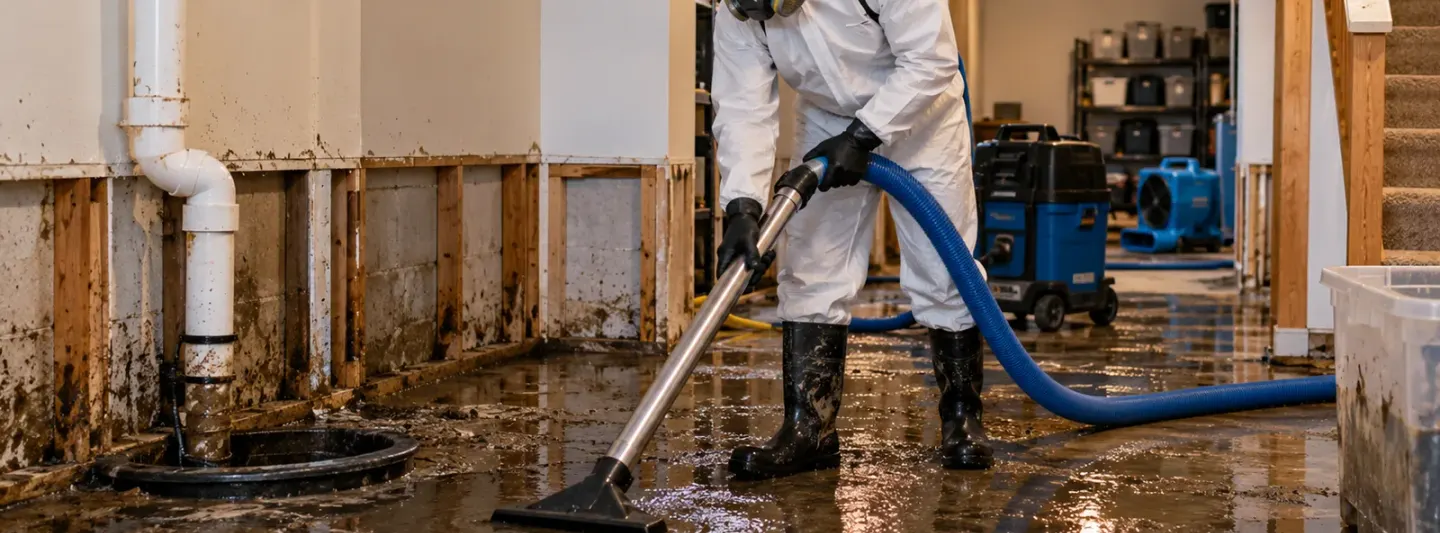
THE 2026 COST ANSWER
Sewage cleanup commonly costs $7–$15 or more per affected square foot.
HomeGuide's sewage-cleanup guide reports $7–$15+ per square foot and an overall planning range of $2,000–$15,000+ for many cleanup projects. Extensive damage that includes repair and restoration can reach $15,000–$50,000+. These figures describe different scopes; they are not prices to add together.
The area-based figure and the total-project range are alternative ways to estimate the cleanup, not separate invoice lines. Plumbing diagnosis, pipe replacement, replacement finishes and personal-property losses may be additional if excluded from the cleanup quote.
| Reported scope | Planning range | What drives the bill |
|---|---|---|
| Single-room spill | $2,000–$3,000 | Prompt access and a limited contaminated area |
| Multiple-room backup | $3,000–$7,000 | More extraction, containment and material removal |
| Large contaminated area | $7,000–$15,000 | Extensive affected floor and wall materials |
| Extensive restoration | $15,000–$50,000+ | Cleanup plus significant structural and finish repairs |
HomeGuide's bands are national published references, not a quote collected by Repair Cost Ledger. A large finished basement may cost more than an equally sized unfinished utility room. Local rates, response time and the materials that cannot be salvaged change the result.
BEFORE ANY COST-SAVING DECISION
Treat suspected sewage as a contamination and electrical-safety problem first.
A backed-up toilet, floor drain or sewer line can carry microorganisms and other contaminants. Stop using fixtures that may feed the affected drain, keep children and pets away, and contact qualified restoration and plumbing professionals. Do not walk into standing water to reach an electrical panel or unplug equipment.
The CDC advises switching off power only from a dry, safe location. If reaching the switch means entering standing water, use an electrician. Avoid contact with water that may contain sewage; never mix bleach with ammonia or other cleaners. Professionals should assess electrical hazards, exposure, containment and disposal before cleanup begins.
Keep the area closed
Limit exposure, keep occupants and pets away and avoid moving contaminated items into clean rooms.
Call a plumber
Identify the blockage or failed drain so continued wastewater flow does not undo restoration work.
Document what you can see
Photograph accessible damage from a safe location, note the start time and preserve contractor records.
Arrange qualified cleanup
Ask how the contractor will handle contaminated porous materials, drying and verification.
EPA flood-cleanup guidance also warns that prolonged wet conditions can support mold growth. Do not delay urgent safety or containment work just to compare multiple prices, but require an itemized record as the job progresses.
UNDERSTAND THE THREE BILLS
Cleanup, sewer repair and rebuilding are not the same project.
The word restoration is often used for the whole event, but a proposal may cover only the emergency response. A low initial price is not necessarily the low total cost. Before approving work, establish which contractor is responsible for each stage.
Make safe, remove and dry
Contain the area, extract contaminated water, assess exposed materials, remove unsalvageable debris, clean remaining surfaces and document drying.
Core cleanup scopeFix why sewage came back
Investigate the drain or main sewer line, clear or repair the obstruction and confirm the line can be used safely again.
May be separateRestore rooms and finishes
Replace removed drywall, insulation, flooring, trim and cabinets when appropriate. Painting and contents treatment may also be separate.
Often priced laterThe distinction matters even if one contractor coordinates everything. Ask for separate subtotals for mitigation, plumbing and reconstruction. For the underlying pipe scope, see our sewer line repair cost guide or sewer line replacement cost guide.
CONTAMINATION CHANGES THE SCOPE
The material that got wet can matter more than the depth of the water.
A shallow backup that reaches carpet, padding or insulation may create more removal work than deeper water contained on a cleanable hard surface. Restoration decisions depend on contamination, material properties, time wet and professional assessment; no material should be called safe solely because it appears dry.
Carpet, pad, insulation and wallboard
May require controlled removal and replacement after sewage exposure. Ask how removal limits are determined and documented.
Subfloor, framing and hard surfaces
May need professional cleaning, drying, inspection and, depending on condition, additional removal or repair.
Furniture, cabinets and electrical equipment
Require material-specific decisions. Electrical items that contacted water need qualified assessment before reuse.
Hidden cavities and built-ins
Contamination behind baseboards and cabinets can increase demolition and prolong drying and rebuilding.
Ask whether the invoice includes both contaminated-material removal and reinstalling the replacement material. The first is mitigation; the second is reconstruction. Both may be necessary, but they should not be concealed inside an undefined line called “restoration.”
TWO WAYS TO READ THE COST DATA
A 250-square-foot room and a 400-square-foot basement do not have one fixed cleanup price.
These examples are illustrative calculations using HomeGuide's $7–$15+ per-square-foot reference. They are not contractor estimates or reported customer projects. The upper bound can be exceeded when contamination and reconstruction are more extensive.
250 ft² affected room
A small job can exceed simple area multiplication because mobilization, access and minimum crew charges do not scale down proportionally. HomeGuide separately reports a $2,000–$3,000 range for limited single-room spills.
400 ft² basement area
If drywall, insulation or flooring must be rebuilt, that scope may be billed separately. A pipe excavation, replacement or ongoing sewer defect is not part of this arithmetic example.
Do not add the $2,000–$15,000+ project range on top of these results. It is an alternative national project-level planning reference, while these examples apply a unit price to measured affected area. Only a written local scope can reconcile the differences.
| Work stage | Written evidence to request | Usually separate from |
|---|---|---|
| Emergency response | Arrival time, safety assessment and affected rooms | Permanent repairs |
| Removal and cleaning | Material quantities, handling, disposal and cleaning scope | New finishes |
| Drying and verification | Equipment days, moisture logs and completion criteria | Source-pipe repairs |
| Sewer repair | Identified cause, line work and retesting | Contamination mitigation |
| Reconstruction | Material, labor and finish allowances | Emergency extraction |
DOCUMENT THE LOSS
Do not assume a standard homeowners policy covers a sewer backup.
Insurance coverage depends on the contract, exclusions, limits, deductibles and any water-backup endorsement. The National Association of Insurance Commissioners identifies sewer or drain backup as a coverage that may be added to homeowners insurance. A sewer-backup loss is not necessarily treated the same way as an external flood.
Contact your insurer promptly about notification and mitigation requirements. Where it is safe, preserve photographs, a list of damaged contents, the plumber's diagnosis, itemized invoices, disposal records, change orders and drying logs. Do not delay emergency safety measures while waiting for an adjuster, but ask what documentation will be needed.
Does the policy include sewer or drain water-backup coverage? What is the applicable limit and deductible? Are cleanup, damaged contents, plumbing-source work and reconstruction evaluated differently? Obtain the answer based on the actual policy terms.
BEFORE APPROVING A QUOTE
Seven questions that reveal what the cleanup price actually buys.
- What caused the backup? State whether the source has been identified and who will fix the drain or pipe.
- How was the contaminated area measured? Show rooms, affected surfaces, photographs and any moisture map used for pricing.
- What must be discarded? Itemize porous materials, quantities, containment and disposal.
- Which cleaning and drying steps are included? Describe equipment, monitoring, documentation and completion criteria.
- What is not included? Identify sewer excavation, plumbing repairs, reconstruction, contents handling and optional testing.
- Who approves additional work? Require a documented change-order process when hidden contamination is uncovered.
- How will the job be verified? Clarify moisture records, cleaning verification, final walk-through and responsibility for future problems.
A professional can reasonably change the scope when previously concealed damage is discovered. The protection is not a promise that the first estimate will never change; it is requiring measurements, a clear explanation and approval before the work expands.
QUICK ANSWERS
Sewage backup cleanup FAQ
Does a plumber's drain-clearing bill include the cleanup?
Not necessarily. Clearing a blockage restores drainage, while contaminated surfaces and materials may still need professional removal, cleaning and drying. Ask for separate scope descriptions.
Can I keep wet carpet after a sewer backup?
Sewage-exposed porous materials often require removal. An appropriately qualified restoration professional should evaluate specific materials and contamination; do not rely on the appearance or odor alone.
Why can a small backup be expensive?
Emergency response, protective measures, minimum crew time and disposal can remain necessary even when few square feet are affected. Area multiplication is only an initial comparison.
Should drying start before repairing the sewer line?
The source and any immediate hazards must be controlled so new wastewater does not recontaminate the area. Qualified plumbers and restoration contractors may coordinate urgent work in parallel.
TRANSPARENCY & REFERENCES
How we checked the prices and safety guidance.
Published price benchmarks are attributed to their original providers, not represented as estimates gathered directly by Repair Cost Ledger. Cost-per-area arithmetic is illustrative, not a real client invoice. Cleanup and complete rebuilding are different scopes. Technical and insurance sources were reviewed in October 2026; local prices and rules vary.
- HomeGuide — Sewage Cleanup Cost. National cleanup cost bands, size and scope.
- HomeGuide — Sewer Backup Repair Cost. Distinction between cleanup, drain repair and structural restoration.
- CDC — Safety Guidelines: Reentering Your Flooded Home. Contamination and electrical-safety precautions.
- U.S. EPA — Flood Cleanup to Protect Indoor Air and Your Health. Cleaning hazards and water-damaged materials.
- NAIC — Homeowners Insurance. Sewer backup as a potentially optional coverage.